
Sustainability SVT

SVT is committed to operating its vending machine business responsibly by placing strong emphasis on systematic Environmental, Social, and Governance (ESG) management. The Company integrates sustainability principles into its business operations to drive long-term growth while aligning with the United Nations Sustainable Development Goals (UN SDGs).
Over the past year, the Company has focused on developing energy-efficient, environmentally friendly, and high-performance vending machine systems. At the same time, SVT has continued to respond comprehensively to the expectations of all stakeholder groups while strengthening its long-term growth potential and competitiveness.
In addition, the Company places importance on selecting consumer products that meet quality and safety standards to satisfy the diverse needs of consumers. SVT conducts business with transparency, integrity, and accountability toward society and the environment, with the goal of growing alongside Thai society in a stable and sustainable manner over the long term.
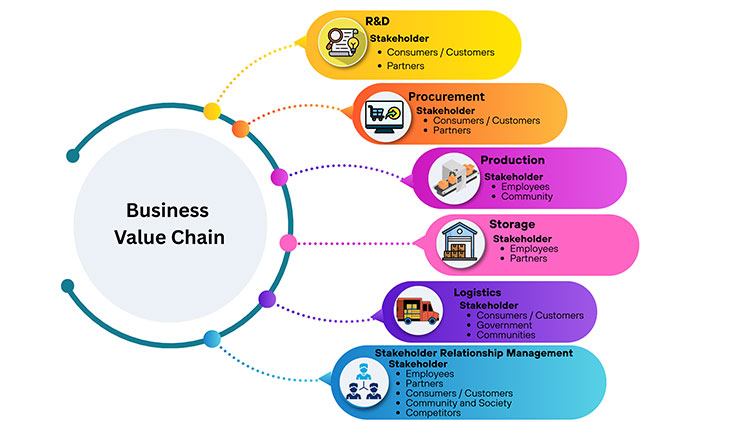
Sun Vending Technology Public Company Limited (“SVT”) places importance on managing environmental, social, and governance (ESG) issues while maintaining a balanced approach to stakeholder engagement across all groups. The Company integrates sustainable development principles into its strategy, vision, mission, and operational processes throughout the entire value chain — from product selection, vending machine installation and management, transportation and replenishment, to customer service. This approach aims to strengthen business growth, enhance competitiveness, and deliver sustainable business performance over the long term.
- Enhance quality of life and well-being for people of all ages Provide and distribute safe products that support consumers’ health and well-being.
- Improve energy efficiency across business operations and the value chain Continuously develop and enhance energy efficiency in operations and throughout the value chain to support sustainable energy use.
- Promote equal access to economic, social, and political opportunities Create opportunities for all individuals regardless of age, gender, disability, race, ethnicity, origin, religion, economic status, or any other condition.
- Drive sustainable production and consumption practices Promote efficient and sustainable use of natural resources, reduce food waste, minimize the release of chemicals and hazardous waste into the environment through proper management, and reduce waste through reuse and recycling.
- Support low-carbon development and climate resilience Advance low-carbon business practices while integrating climate adaptation measures and sustainable natural resource management, with a focus on reducing both direct and indirect greenhouse gas emissions across the value chain.
Sun Vending Technology Public Company Limited (“SVT”) places importance on identifying material sustainability topics (Materiality) as a framework for managing and driving business growth in a balanced manner across economic, social, and environmental dimensions.
The Company identifies, analyzes, and assesses material sustainability topics in alignment with the nature of its vending machine business and related supply chain activities. The assessment process is conducted with reference to the Global Reporting Initiative (GRI) reporting framework and disclosed in accordance with the SET Reporting Guide to ensure that sustainability practices remain transparent, comprehensive, and responsive to stakeholder expectations.
Identification of Material Topics
The Company identifies material sustainability topics by considering stakeholders throughout the value chain and covering economic, social, and environmental dimensions. Both internal and external factors are evaluated, including business strategies and stakeholder expectations, to prioritize key issues and establish appropriate and sustainable management approaches.
Prioritization of Material Topics
SVT prioritizes sustainability issues based on stakeholder importance together with the characteristics of its vending machine business. This approach ensures that identified topics reflect both business impacts and stakeholder expectations comprehensively.
Review of Material Topics
The Company reviews prioritized material topics and uses them to define sustainability strategies that align with the vending machine business model. This includes energy management, technology, service quality, and supply chain management.
Material topics are reviewed continuously to remain aligned with changes in the business environment and evolving stakeholder expectations.
Continuous Report Development
The Company regularly reviews sustainability information while gathering feedback and recommendations from stakeholders. This process helps ensure that business operations and sustainability priorities remain relevant and responsive to stakeholder expectations.
Material Sustainability Topics – 2025
Governance
- Sustainable and continuous business growth
- Compliance with laws, regulations, and requirements
- Transparent corporate governance
- Fair procurement practices
Social
- High-quality and safe products and services
- Employee health, safety, and occupational well-being
- Fast and effective customer communication channels
- Fair and equitable compensation and employee benefits
- Community and social development
Environmental
- Effective environmental management
- Business operations aligned with ESG principles
Materiality Assessment
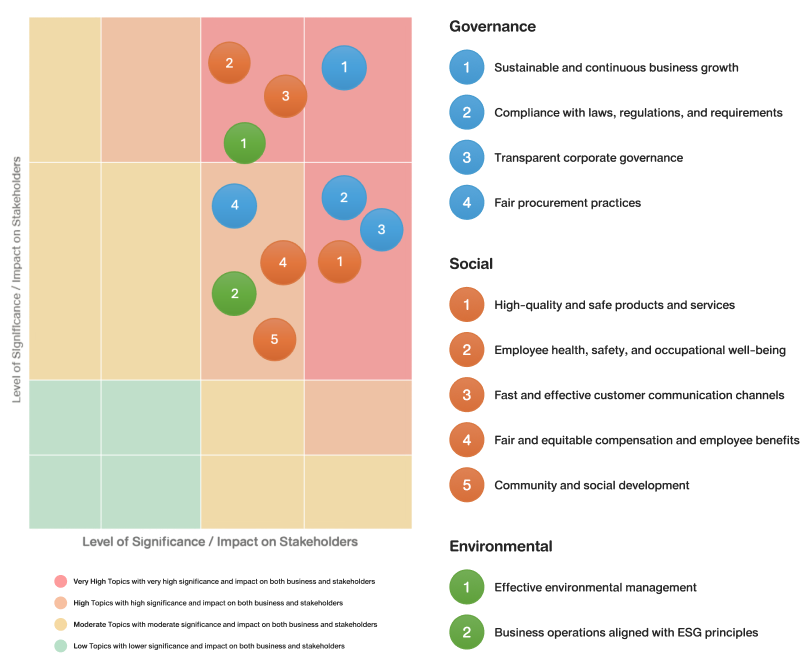
Based on the material sustainability assessment, the Company emphasizes sustainable business operations by identifying issues that significantly affect both business performance and stakeholders across economic, social, and environmental dimensions.
From an economic perspective, the Company focuses on achieving stable and continuous growth in the vending machine business, complying with laws and regulations, maintaining transparent and accountable governance, and ensuring fair and ethical procurement practices.
From a social perspective, the Company prioritizes delivering quality and safe products and services that meet customer needs, protecting employee health and occupational safety, maintaining effective customer communication channels, providing fair and equal compensation and benefits, and continuously contributing to community and social development.
From an environmental perspective, the Company is committed to effective environmental management, reducing environmental impacts from vending machine operations, and conducting business in accordance with ESG principles to create long-term balance between business growth and social and environmental responsibility.









| Group of stakeholders | Stakeholders’ expectations | Responses to stakeholder expectations | Channels for engagement and communication |
|---|---|---|---|
| Government agencies and Regulators |
|
|
|
| Suppliers Contractors |
|
|
|
| Consumers Customers |
|
|
|
| Employees |
|
|
|
| Investors or investment institutions Shareholders |
|
|
|
| Community Society |
|
|
|
| Media |
|
|
|
| Competitors |
|
|
|
SVT is committed to driving sustainable business growth under the Green Economy framework by creating balanced growth across three dimensions: economic, social, and environmental. This commitment covers all business operations throughout the supply chain and supports the Company’s vision of becoming an innovation-driven organization with modern people management and transparent, efficient, and socially responsible operations.
The Company also actively supports the United Nations Sustainable Development Goals (SDGs) through the Environmental, Social, and Governance (ESG) framework. SVT aligns sustainability goals with its policies and management approach through five key objectives.
Sustainability Management Goals
- Improve quality of life and well-being for people of all ages Provide and distribute safe products that support consumer health and well-being.
- Improve energy efficiency across operations and the value chain Continuously enhance energy performance to support sustainable energy use.
- Promote equal access to economic, social, and political opportunities Ensure inclusiveness regardless of age, gender, disability, race, ethnicity, origin, religion, economic status, or other factors.
- Promote sustainable production and consumption Encourage efficient and sustainable use of natural resources, reduce food waste, minimize chemical emissions and hazardous waste, and support reuse and recycling.
- Support low-carbon development Integrate climate adaptation measures and sustainable natural resource management, with a focus on reducing direct and indirect greenhouse gas emissions across the value chain.
- Promote good corporate governance and responsible business conduct
Directors, executives, and employees are required to comply with corporate governance principles, business ethics, policies, and related practices. Relevant departments communicate these expectations to stakeholders both inside and outside the organization to strengthen a culture that values ESG and sustainable growth. - Establish sustainability policies and goals
Define sustainability objectives that address stakeholder expectations throughout the value chain and strengthen ESG management. - Conduct ESG risk assessment and management
Identify and assess ESG-related risks that may impact the Company, prioritize material issues, establish mitigation measures, and integrate risk management into business operations.
| Sustainability Topic | Commitment | Target |
|---|---|---|
| Continuous Business Growth | Expand vending machine locations and develop services aligned with consumer behavior | Continuously increase installation points and revenue |
| Regulatory Compliance | Operate in full compliance with laws, regulations, and requirements | Zero significant violations of laws or regulations |
| Transparent Corporate Governance | Conduct business transparently, ethically, and with accountability | Zero corruption-related complaints |
| Fair Procurement | Ensure transparent and fair procurement practices | Zero complaints related to unfair procurement |
| Product and Service Quality & Safety | Deliver quality, standard-compliant, and safe products and services | Continuously meet customer expectations |
| Employee Welfare, Fair Compensation, Equality, Health & Safety | Provide fair compensation, promote equality, and maintain a safe workplace |
|
| Effective Customer Communication | Enhance communication channels for convenience and responsiveness | Improve customer satisfaction |
| Community and Social Development | Support communities through social initiatives and stakeholder engagement | Continue implementing social development activities |
| Environmental Management | Reduce environmental impacts through efficient resource use | Reduce energy and fuel consumption |
| ESG Integration | Embed ESG principles into business strategy and operations | Continuously strengthen ESG performance |
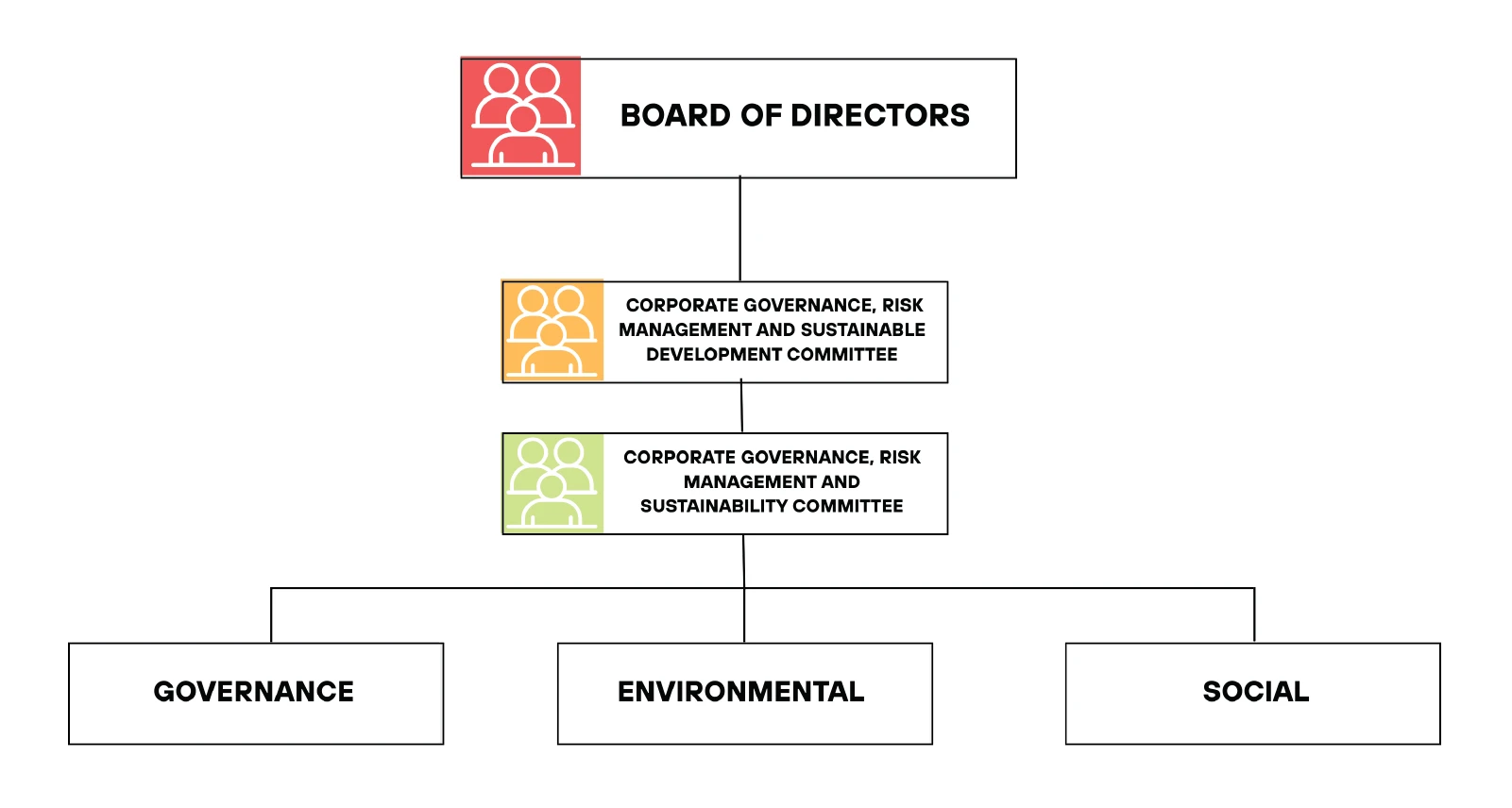
- Establish and review the Board Charter at least once a year to ensure compliance with applicable laws, company policies, and business operations.
- Establish and review the Corporate Governance Policy, Code of Ethics, Code of Conduct, and Board Manual at least once a year.
- Define the Company's vision, strategy, policies, business plans, budget, and oversee management to achieve the Company's objectives.
- Monitor and evaluate the Company's performance to ensure alignment with approved plans, targets, and budgets.
- Define the roles and responsibilities of the Chairman of the Board and the Chief Executive Officer.
- Establish and periodically review the internal control system and ensure appropriate disclosure in the Annual Report.
- Oversee the accounting system, financial reporting process, and preparation of financial statements in accordance with applicable accounting standards.
- Consider the appointment and remuneration of the external auditor before proposing them to shareholders for approval.
- Monitor significant audit findings and ensure appropriate corrective actions are taken.
- Oversee and regularly review the Company's risk management and internal control systems.
- Appoint, remove, and assign responsibilities to directors, Board committees, and the Company Secretary.
- Approve the organizational structure, establish Board committees, and oversee their performance.
- Appoint or replace directors or executives to represent the Company in subsidiaries or associated companies.
- Evaluate the performance of the Board of Directors and senior executives.
- Protect shareholders' interests and ensure accurate, transparent, and timely disclosure of corporate information.
- Ensure compliance with applicable laws, Stock Exchange regulations, and other relevant requirements.
- Delegate authority to qualified persons when appropriate and supervise such delegated authority.
- Approve the appointment or change of authorized signatories of the Company.
- Appoint the Company Secretary and define the scope of responsibilities.
- Approve investment projects, acquisitions or disposals of assets, and connected transactions in compliance with applicable regulations.
- Approve interim dividend payments and report them to the shareholders' meeting.
- Consider and approve other significant matters for the best interests of the Company.
Note: Directors who have a conflict of interest in any agenda item shall not participate in voting on that matter.
Corporate Governance
- Establish corporate governance, ethics, anti-corruption, and related policies in compliance with applicable laws and business practices.
- Regularly review corporate governance policies and related practices.
- Provide guidance and promote compliance with corporate governance principles among directors, executives, employees, and relevant stakeholders.
Risk Management
- Establish the Company's risk management policy, framework, and plans.
- Promote risk management practices throughout the organization.
- Monitor, evaluate, and provide guidance to ensure effective risk management.
- Continuously improve the Company's enterprise risk management system.
Sustainability
- Establish sustainability policies and guidelines in line with applicable laws and the Company's business direction.
- Develop and review sustainability strategies and monitor implementation progress.
- Provide guidance and promote collaboration to support sustainability initiatives across the organization.
Other Responsibilities
- Perform other duties as assigned by the Board of Directors.