
Social

- Achieve zero lost-time accidents.
- Provide safety training to employees to reduce the risk of workplace accidents.
In 2025, the Company's occupational health and safety performance met the established target. There were no work-related injuries resulting in lost working days and no fatalities resulting from work-related injuries. As a result, the Company's lost-time injury rate and work-related fatality rate were both zero.


To support its occupational health and safety goals and strategies, the Company continuously promotes employee awareness, risk reduction, and safe working practices. The Company implements various activities and programs and provides welfare benefits that support employees' health, well-being, and safety as follows
1. Safety
Basic Firefighting Training and Fire Evacuation Drills
The Company places importance on emergency preparedness and conducts basic firefighting training and fire evacuation drills annually. These activities help employees understand how to respond correctly, quickly, and safely in the event of an emergency.
2. Occupational Health
Annual Health Check-ups
The Company provides annual health check-ups for employees at both its headquarters and branches. The program aims to promote employees' health and well-being, support effective work performance, and ensure compliance with occupational health and safety requirements.
3. Workplace Environment
Increasing Green Areas in Offices
The Company increases green areas within its offices by placing plants in various areas of its buildings. This helps create a pleasant working environment, promote relaxation, and reflect the Company's commitment to environmentally responsible operations.
Recreation Areas
The Company provides recreation areas for employees to support their well-being, reduce stress, strengthen relationships among employees, and promote a positive working atmosphere.
Co-Working Space
The Company provides Co-Working Spaces to support effective collaboration, encourage the exchange of ideas and creativity among employees, and create a flexible working environment within the organization.


- Have zero complaints regarding violations of social and human rights laws or regulations.


Human Rights Management
The Company recognizes the importance of treating everyone equally, preventing discrimination, and respecting individual differences. The Company promotes respect for fundamental human rights at all levels, regardless of gender, race, religion, beliefs, culture, age, or physical limitations.
These principles are strictly applied throughout the human resources management process, including recruitment, career advancement, employee development, performance evaluation, and compensation.
The Company also places importance on workforce diversity, with the aim of promoting gender equality and equal opportunities for employees with disabilities. All employees are provided with equal opportunities to develop their careers and progress within the organization.

Employees are one of the Company's key resources and play an important role in business growth. The Company is therefore committed to developing employees' professional skills and capabilities, enabling them to grow in their careers, keep pace with technological changes, and adapt to the changing business environment.
The Company provides both internal and external training programs, as well as work manuals to support employees in performing their responsibilities effectively. The Company also promotes continuous learning through training programs, monitors training outcomes, and records the number of training hours each year to enhance employee capabilities in line with the Company's business strategies.
- Have zero complaints regarding labor rights violations.
- Develop employees by enhancing the knowledge and skills required for their current responsibilities while developing new skills needed for their work (Upskill and Reskill).
- Provide employees with training and opportunities to develop the skills required for their work.
In 2025, the Company provided 28 training programs to enhance employees' skills and capabilities, with a total of 7,206 training hours for 956 employees, representing an average of 7.54 training hours per employee per year.
The Company also conducted an employee engagement survey and used the results to improve its human resource management practices in line with employees' needs. The survey achieved a 100% employee response rate, with the results showing an employee satisfaction level of more than 80%. This reflects a positive level of employee engagement and attitudes toward the organization.
In addition, the Company's employee turnover rate was 25.75%, representing a decrease of 2.81 percentage points from the previous year. This reflects the effectiveness of the Company's employee care and retention measures.
The Company also organized Team Building activities to strengthen employee engagement and promote teamwork within the organization. The activities received an average satisfaction score of 4.77. The Company aims to make such activities part of its efforts to build a positive organizational culture, promote a collaborative working environment, and support long-term sustainable business operations.




1. Recruitment
The Company recognizes the importance of retaining and developing qualified employees to strengthen its competitiveness. The Company places importance on both recruitment and selection processes, together with employee development to enable employees to achieve their assigned goals.
The Company treats employees fairly and equally, without discrimination, and provides fair compensation based on appropriate criteria.
2. Long-Term Employee Development and Capability Building
The Human Resources Department encourages and supports employees in continuously developing their capabilities while promoting a positive organizational culture, physical and mental well-being, a good working environment, and teamwork.
The Company has established employee development programs focusing on enhancing the skills and knowledge required for employees' current responsibilities, together with developing new skills needed for future work (Upskill and Reskill), in line with the Company's business growth and direction.
In addition, the Company has established a succession planning process to prepare employees for key positions within the organization. The Company plans to identify and develop qualified internal employees or recruit suitable external candidates to replace key positions when vacancies arise. This helps ensure business continuity and effective operations while motivating and retaining high-potential employees by providing opportunities for career development and advancement.
3. Employee Engagement, Motivation and Retention
The Company places importance on employee retention as an important factor supporting organizational growth. The Company has established clear performance evaluation criteria based on employees' work achievements. The results are used to determine compensation and develop plans to improve work performance.
The Company also provides appropriate employee benefits to support employee motivation and demonstrate its commitment to long-term employee care. These include a provident fund, which supports employees' financial well-being during employment and after retirement.
Other employee benefits include
- Annual health check-ups
- Emergency loans
- Funeral assistance
- Employee uniform benefits
4. Occupational Health and Safety
The Company places strong emphasis on the safety and well-being of its employees and workers. The Company strictly complies with applicable occupational health, safety, and working environment laws and regulations.
The Company also appoints professional safety officers and provides mandatory safety training to ensure that employees have appropriate knowledge and understanding of workplace safety requirements. These measures help ensure that activities across all business units are carried out in accordance with applicable safety standards.
- Develop and drive social progress through activities and projects that support sustainable community and social development.
- Build awareness and encourage participation among employees and relevant stakeholders to jointly create stronger and more sustainable communities and society.
- Expand the impact of activities and projects to improve the well-being of communities and society.
The Company has implemented social projects and community initiatives across various dimensions, including improving people’s quality of life, supporting education, and promoting ethical values and social responsibility.

The Company operates responsibly toward communities and society by focusing on improving community well-being while encouraging equal participation from communities and stakeholders. The Company respects diversity, supports quality-of-life development, and strengthens community resilience to achieve sustainable development through the following management approaches:
1. Conducting Business with Consideration for Communities and Society as Key Stakeholders
The Company promotes inclusive and equitable quality-of-life development by adopting the Sustainable Development Goals (SDGs) as a framework for operations. This approach supports economic growth while improving people’s well-being, reducing inequality, and strengthening communities to become more self-reliant through ongoing social projects and initiatives.
2. Continuous Social Development Projects
The Company promotes a better society and actively contributes to solving social challenges sustainably through various social assistance and development programs.
This includes environmental initiatives that reduce business impacts, such as the Alternate Wetting and Drying (AWD) Rice Cultivation Project, which helps reduce greenhouse gas emissions and supports sustainable development.
The Company also supports social initiatives, including collaboration with Singha Asa Mobile Medical Units to improve community well-being and expand educational opportunities in remote areas.
- Build engagement with relevant stakeholders through various activities to foster business cooperation and support the Company’s commitment to sustainable business practices.
- Communicate through various activities to ensure that relevant stakeholders understand the Company’s approach to sustainable business operations and contribute to achieving its sustainability objectives.
The Company places importance on comprehensive stakeholder engagement, with the following key stakeholder groups
| Group of stakeholders | Stakeholders’ expectations | Responses to stakeholder expectations | Channels for engagement and communication |
|---|---|---|---|
| Government agencies and Regulators | Compliance with Regulations The company's business operations in accordance with the Bio-CircularGreen Economy (BCG Model) principles for sustainable development, as per the 2021 National Agenda announcement. | Comply with and support policies from regulatory bodies and government agencies. Study and apply the Bio-CircularGreen Economy concept to sustainable business practices. Continuously monitor government policies to enable timely formulation of business strategies. |
|
| Suppliers Contractors | Impacts arising from changes in procurement practices in accordance with ESG guidelines; Business growth and stability; Fair procurement and timely payments. | Establish procurement practices with partners or contractors in accordance with ESG principles. Provide channels for receiving suggestions or feedback. Disclose key procurement information. |
|
| Consumers Customers | Delivery of quality products that meet the needs of customers and consumers Hygiene, safety, and nutritional suitability of food and beverages Effective and prompt communication with customers | Performance reviews are conducted to improve and develop product quality as a regular agenda item in meetings. Safety and nutritional standards are established for selecting products for distribution to consumers. Channels are opened for receiving suggestions or feedback through call center systems and social media. |
|
| Employees | Career growth opportunities Fair welfare and compensation Fair and equitable treatment of employees Safe and suitable working environment | Promote the enhancement of employee capabilities, both in professional skills and other supporting skills, along with setting clear key performance indicators. Fairly consider compensation and benefits for employees, taking into account market wages compared to other companies. Establish transparent practices for employees. Establish safety and occupational health work practices, and emphasize strict adherence. Provide channels for employees to present various opinions to management. |
|
| Investors or investment institutions Shareholders | Continuous growth in operating performance Transparent corporate governance Operating business in accordance with ESG principles | Management conducts analysis and feasibility studies, covering both budget and return on investment for each project, before making a decision. Governance can be transparently audited. Listens to feedback to improve operations. Discloses important ESGrelated information to build comprehensive and integral confidence among stakeholders. Integrates ESG-related operations into the development of business and strategic plans. |
|
| Community Society | Potential safety and environmental impacts from business operations. Participation in community development, including providing knowledge, creating careers and income, and supporting funding or equipment beneficial to the community. | Establish guidelines and manage business activities to mitigate potential adverse effects on society and the environment. Promote the establishment of projects that foster participation among the company, community, and society. |
|
| Media | Factual information | Disclose important company information, news, and operational results that are transparent and verifiable. |
|
| Competitors | Fair Competition | Conduct business ethically and strictly comply with trade competition law. |
|
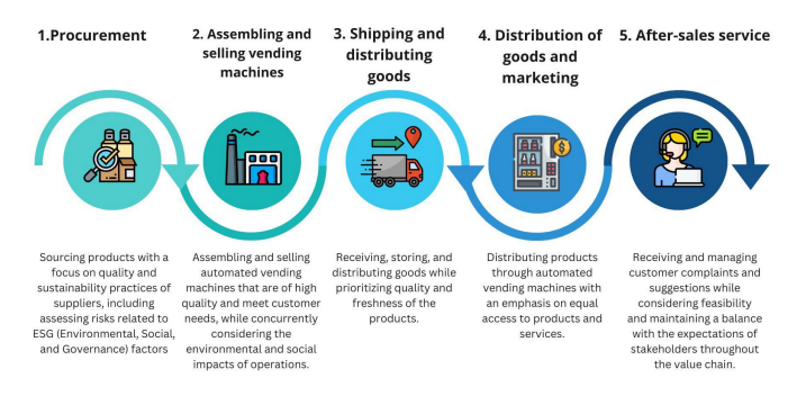
The Company recognizes that supply chain management covers all stages of business operations, including sourcing, design, research and development, procurement, production, storage, transportation, and stakeholder relationship management.
The Board of Directors has established policies to promote collaboration between the Company and stakeholders in order to strengthen business performance while ensuring stakeholders’ rights are respected in accordance with applicable laws.
The Company identifies eight key stakeholder groups as follows
1. Government and Regulatory Authorities: The Company operates in compliance with government regulations and requirements through the following practices:
2. Suppliers: The Company treats suppliers fairly and promotes mutual benefits through the following practices:
3. Customers: The Company believes customer satisfaction and trust are key drivers of long-term success and therefore commits to:
4. Employees: The Company considers employees to be valuable resources and key contributors to success. Management practices include:
5. Shareholders: The Company performs duties responsibly, carefully, and ethically to create sustainable returns through the following practices:
6. Communities and Society: The Company recognizes its responsibilities toward society and local communities through the following commitments:
7. Media: The Company values media as an important communication channel and promotes transparency through:
8. Business Competitors: The Company conducts business under legal and ethical principles through the following practices: